
50 PCS 6x9" Fruit Protection Bags Review: Simple, Effective Pest Barriers for Home Orchards
Introduction
For many home gardeners, the most frustrating part of growing fruit is losing nearly ripe harvests to insects, birds, and other pests. Netting entire trees or repeatedly spraying can be time‑consuming and expensive. Individual fruit protection bags offer a more targeted alternative: you protect only the fruit you care about most.
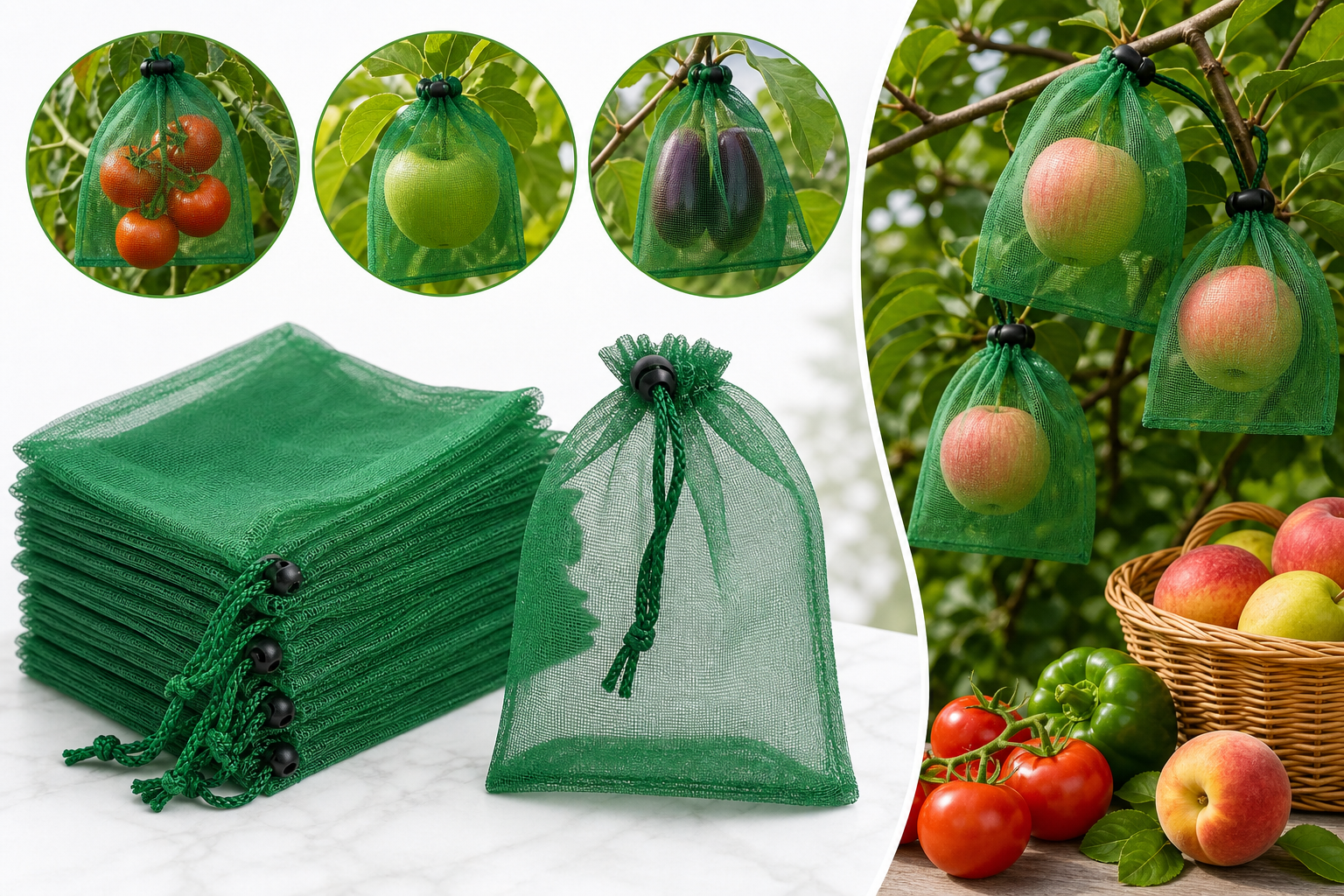
The 50 PCS 6x9 inches Fruit Protection Bags, Green Netting Fruit Cover Bags with Drawstring are designed exactly for this purpose. Each order includes 50 green mesh bags measuring 6 x 9 inches, sized for medium fruits such as apples, pears, plums, peaches, and larger tomatoes or peppers. They’re intended to be slipped over developing fruit and cinched closed to form a breathable protective barrier.
In this review, I’ll walk through their design, ease of use, performance in a typical backyard setting, and who they’re best suited for.
Note: At the time of writing, these bags are available on Amazon for around $5.99, but pricing may change.
Key Points
- Targeted protection: Ideal for protecting select high‑value fruits rather than covering an entire tree or bed.
- Size & fit: 6 x 9 inches works well for many tree fruits (apples, pears, peaches) and larger vegetables (tomatoes, eggplants, peppers) while still being manageable on the branch.
- Mesh material: Fine polyester mesh helps block many insects and birds while allowing air circulation and light penetration.
- Drawstring closure: Integrated drawstring makes it easy to cinch the bag around stems or small branches so it stays in place through wind and light rain.
- Reusable: The bags can be removed, washed or shaken out, dried, and reused for multiple seasons with reasonable care.
Experience
Design and Build Quality
These fruit protection bags use a lightweight polyester mesh in a green color. The mesh is fine enough to keep out common pests such as:
- Fruit flies and many moth larvae
- Beetles and leaf‑chewing insects
- Birds targeting ripening fruit
Yet it remains open enough that:
- Air can circulate around the fruit to reduce rot risk
- Rainwater can drain instead of pooling
- Sunlight can still reach the developing fruit
Stitching on typical products in this category is simple but adequate. The 6 x 9 inch size is a good compromise: large enough for most individual fruits or small clusters, but small enough to maneuver around interior branches without snagging excessively.
The drawstring is the key functional element. It’s sewn into a hem at the bag opening, so you can slip the bag over a fruit and then pull the string to snug it around the stem or small twig. This makes installation significantly faster than tying separate twist ties or strings.
Installation and Use in the Garden
Using the bags is straightforward:
- Wait for fruit set: Once fruits are pea‑ to marble‑sized and pollination is complete, you can begin bagging. Bagging too early, before pollination, can reduce fruit set on crops that require pollinators.
- Slip bag over the fruit: Gently gather the fruit or small cluster with one hand and slide the bag up from below, ensuring there’s enough slack for the fruit to grow.
- Cinch the drawstring: Pull the drawstring until the opening closes snugly around the stem or small branch, then tie a simple knot or bow if needed.
- Check coverage: Confirm the bag isn’t compressing leaves tightly against fruit (which can trap moisture) and that there’s room for growth.
In typical backyard use, once cinched properly these bags stay in place through wind and light to moderate storms. Because the material is light, they don’t add much weight or torque to branches.
On tree fruits like apples and pears, the 6 x 9 size is particularly handy: you can bag individual fruits or small pairs. For tomatoes, one bag can protect a sizable cluster if the truss is compact; for larger, sprawling clusters you may still prefer one bag per fruit for the best protection.
Performance Against Pests
In practice, these bags are most effective against:
- Birds: They prevent pecking and stealing entirely as long as the bag is intact.
- Insects: Many flying insects and caterpillars are blocked from reaching the fruit surface. Fine mesh limits access while still breathing.
- Light animal pressure: Squirrels and larger animals can be deterred, but determined animals may chew through or tear bags if they learn that fruit is inside.
They are not a complete solution for every problem. Potential limitations include:
- Existing infestations: If larvae or eggs are already inside the fruit before bagging, the bag will not fix internal damage.
- Very small insects: Extremely fine pests may still enter through the mesh or gaps at the stem if the drawstring is not tight.
- Heavy animal pressure: In areas with aggressive squirrels, raccoons, or possums, some bags may be torn or removed.
Durability and Reuse
For a lightweight mesh, durability is reasonable. With normal handling:
- Most bags should last at least a full season.
- If you avoid snagging them on sharp branch stubs and store them dry over winter, many gardeners will get multiple seasons out of the set.
The green color helps the bags visually blend into foliage, so they’re less obtrusive than bright white or multicolored options. However, it can also make them a bit harder to spot from a distance when you’re checking which fruits are bagged.
Cleaning and Storage
After harvest:
- Shake out plant debris and insect frass.
- If they’ve accumulated sooty mold or dust, a quick swish in mild soapy water followed by a rinse and air dry works well.
- Store in a breathable bag or box in a dry location to avoid mildew.
Given the relatively low cost per bag (especially at around $5.99 for 50 pieces), the ability to reuse them for multiple seasons adds good long‑term value.
Pros
- Targeted protection for high‑value fruit, reducing the need for broad pesticide applications.
- Convenient 6 x 9 inch size fits many common fruits (apples, pears, plums, peaches, larger tomatoes, peppers).
- Breathable mesh reduces moisture buildup and helps prevent rot compared with solid plastic bags.
- Integrated drawstring closure makes installation fast and secure.
- Reusable over multiple seasons with basic care, improving cost‑effectiveness.
- Visually unobtrusive green color blends into foliage.
- Pack of 50 gives enough coverage for a typical home orchard or several beds of tomatoes and peppers.
Cons
- Not ideal for very large fruits (e.g., large mangoes, big melon varieties) or very dense clusters of grapes.
- Mesh may not stop the smallest pests or those that enter via stems if the drawstring isn’t cinched tightly.
- Susceptible to tearing if snagged on sharp branches or targeted by determined squirrels and larger animals.
- Manual effort scales poorly: Bagging dozens of fruits is easy; bagging hundreds on large trees can be time‑consuming.
- Green color can hide damage: Rips or holes may be slightly harder to spot at a distance than on white mesh.
Verdict
The 50 PCS 6x9 inches Fruit Protection Bags are a practical, budget‑friendly solution for home gardeners who want to protect select fruits and vegetables without resorting to heavy netting or frequent spraying. Their breathable mesh, convenient drawstring, and versatile size make them especially well‑suited for backyard apples, pears, peaches, and tomatoes.
They’re not a complete replacement for all pest management—particularly in areas with intense pressure from squirrels or very small insects—but as part of an integrated approach, they can dramatically reduce cosmetic damage and losses on your best fruit.
If you’re looking for a simple way to safeguard a modest number of high‑value fruits each season, these 6x9 drawstring fruit protection bags are easy to recommend, especially at their typical price point of around $5.99 for 50 pieces on Amazon.