
Introduction
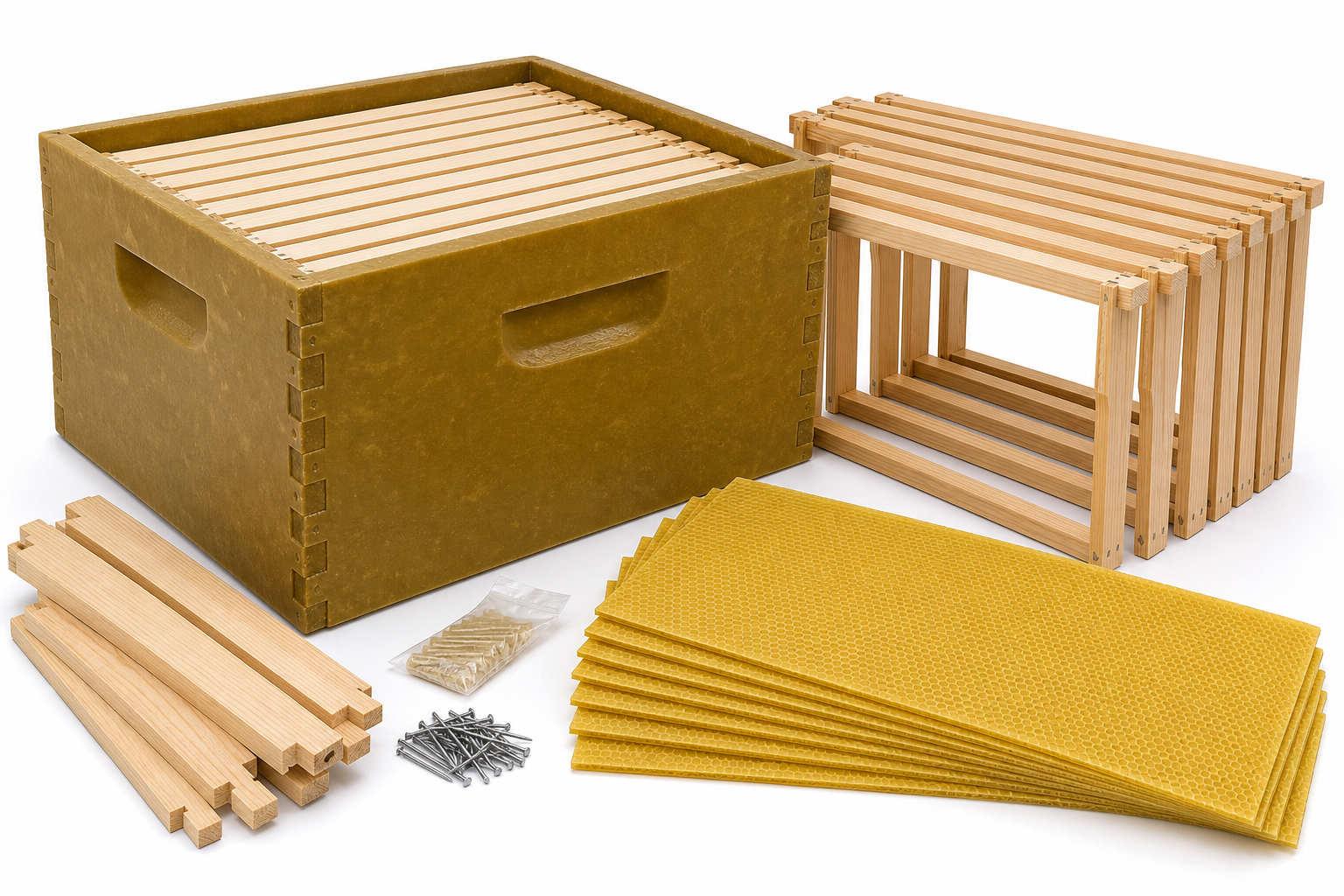
The BeeCastle Heavy Wax Coated Unassembled Langstroth Deep/Brood Box with Frames and Beeswax Coated Foundation Sheet (10 Frame) is designed as a primary brood chamber or an additional deep box for standard 10‑frame Langstroth hives. It ships unassembled and typically includes:
- One 10‑frame deep Langstroth box (brood box)
- Ten wooden frames
- Ten beeswax‑coated plastic foundation sheets
- A heavy exterior wax coating on the box for weather protection
Positioned as a mid‑range option, this box aims to save beekeepers time by bundling compatible components, while the wax coating is intended to remove the need for painting and to offer bees a more natural exterior surface. On retailers like Amazon, it is often listed around $47.99, competing with painted pine brood boxes and other wax‑dipped alternatives.
This review focuses on how the BeeCastle deep box fits into real beekeeping practice, its performance in various scenarios, and whether its design trade‑offs make sense for your apiary.
Typical Use Cases
1. Starting a New 10‑Frame Langstroth Hive
For beginners, a common use is to pair this deep box with a bottom board, inner cover, and telescoping lid to form the first brood chamber of a new hive. It can house a package of bees or a nucleus colony (nuc) once transferred into standard frames.
Key expectations in this scenario:
- Straightforward assembly for new beekeepers
- Reliable frame spacing and fit
- Bees willing to draw comb on the beeswax‑coated plastic foundation without hesitation
2. Adding a Second Brood Box to a Growing Colony
More experienced beekeepers often use this product as a second deep brood box once the first deep is mostly filled with drawn comb and brood. In this role, it must integrate seamlessly with existing Langstroth equipment and support a heavy population as the colony expands.
What matters here:
- Standardized outside and inside dimensions
- Structural durability under the weight of brood, pollen, and honey
- Frames that remain square and sturdy during inspections
3. Replacing Worn or Rotted Equipment
For beekeepers with aging painted boxes, this BeeCastle deep can serve as a replacement brood chamber. The heavy wax coating is pitched as a long‑lasting, low‑maintenance alternative to repainting boxes.
Key considerations:
- Weather resistance of the wax coating
- Resistance to cracking, warping, or joint failure
- Compatibility with existing 10‑frame hardware from other brands
4. Expanding an Existing BeeCastle System
Those already using BeeCastle components may add this box to keep their equipment standardized—helpful when stacking boxes or swapping frames between hives.
Priorities include:
- Consistent rabbets and handhold design
- Interchangeable frames and foundations
- Visual and dimensional continuity across the apiary
Performance in Each Scenario
1. Starting a New Hive
Assembly Experience
The box arrives as unassembled panels with pre‑cut joints (typically dovetail or finger joints). Most users with basic tools (wood glue, rubber mallet or hammer, clamps, and screws or nails) can assemble the box in under an hour, though absolute beginners may need more time. The fit of the joints is generally acceptable, but minor sanding or clamping is sometimes necessary to ensure squareness.
The frames are also unassembled and require gluing and stapling or nailing. This is typical of unassembled frame kits, but it does mean that a new beekeeper should plan for additional work beyond simply screwing the box together.
Bees’ Acceptance of Foundation
The included plastic foundation sheets are pre‑coated with beeswax to encourage the bees to draw comb. In practice, bees tend to accept wax‑coated plastic readily, especially during strong nectar flows. However, as with many brands, some beekeepers find that the "heavy" wax coating on foundations may benefit from an additional layer of melted beeswax, particularly if the factory application is thin. Taking the time to brush or roll on extra wax can noticeably speed up comb building.
Suitability for Beginners
For a first hive, having a box, frames, and foundation bundled in one purchase around $47.99 reduces decision fatigue and ensures all parts are dimensionally compatible. Nonetheless, the unassembled nature demands patience and some basic carpentry skills. Beginners who are comfortable with tools will appreciate the learning opportunity; others might prefer pre‑assembled options.
2. Adding a Second Brood Box
Dimensional Compatibility
The BeeCastle deep is built to standard 10‑frame Langstroth dimensions, so it stacks properly on top of most other 10‑frame hardware. The box typically sits flush with standard bottom boards, deeps, and supers, allowing for tight seams that help with weather protection and bee space.
Structural Strength
Once assembled and glued squarely, the heavy wax‑coated brood box performs well under the weight of a strong colony. The wood thickness is adequate for handling, and the handholds provide enough grip for lifting—even when the box is full of brood and honey. As with most wooden hives, the overall rigidity depends heavily on thorough gluing and proper fastening during assembly.
Managing Moisture and Weather
The exterior wax coating provides a moisture‑resistant barrier, helping the box shed rain instead of soaking it up like raw pine. This can be beneficial in humid or wet climates, potentially extending the life of the equipment. Unlike paint, wax does not peel, but it can weather over time and may require re‑coating after several seasons to maintain maximum protection.
3. Replacing Aging Equipment
Integration with Mixed Brands
In mixed‑brand apiaries, the BeeCastle deep usually fits adequately with other 10‑frame Langstroth boxes and accessories. Minor differences in handhold depth or exterior finish do not typically affect functionality. Frame spacing and rabbet design are within standard tolerances, allowing movement of frames between boxes from different manufacturers.
Durability Over Time
The longevity of any wooden brood box depends on climate, handling, and maintenance. The heavy wax coating acts as a factory‑applied preservative, which can postpone rot and checking compared to uncoated or unpainted bare wood. That said, if the wax layer becomes thin or damaged, beekeepers may need to re‑wax or switch to paint later; painting over residual wax can be tricky because paint adheres poorly to waxed surfaces. Planning ahead about long‑term finish (re‑waxing vs. painting) is important.
4. Expanding a BeeCastle‑Only Setup
Consistency and Stackability
For beekeepers already invested in BeeCastle gear, this deep box integrates cleanly with existing BeeCastle supers, lids, and bottoms. Using boxes from the same manufacturer can simplify:
- Achieving perfect stacks without gaps
- Matching handhold styles for consistent handling
- Ensuring the same interior tolerances across hives
Operational Efficiency
Standardizing on one supplier can reduce the risk of slightly off‑size frames or boxes that bind when moving equipment around the apiary. This BeeCastle deep aims to provide that consistency, which is particularly valuable when managing multiple colonies.
Strengths Across Scenarios
-
Complete Brood Box Kit
The inclusion of both frames and beeswax‑coated plastic foundation means you receive nearly everything needed for a brood box in one package (minus bottom board, covers, and fasteners). This is convenient for new beekeepers and for quickly expanding established hives. -
Heavy Wax Coating on the Box
The thick exterior wax treatment offers an immediate barrier against moisture and weather without requiring paint. For beekeepers who prefer a more natural look or want to avoid painting, this is a strong differentiator. -
Standard Langstroth 10‑Frame Design
Adhering to standard Langstroth dimensions ensures compatibility with a wide variety of beekeeping equipment. This makes the box a flexible option for both starting from scratch and upgrading existing gear. -
Beeswax‑Coated Plastic Foundation
Plastic foundation provides structural stability to comb and tends to be long‑lasting. The beeswax coating improves initial acceptance by the bees and reduces preparation work compared with completely unwaxed plastic. -
Reasonable Value for a Bundled Kit
Considering that the kit includes a deep box, ten frames, and ten wax‑coated foundation sheets, the overall value at around $47.99 can be competitive when compared to buying each component separately—especially for small‑scale or hobbyist beekeepers.
Limitations Across Scenarios
-
Unassembled Components
Both the brood box and frames arrive flat‑packed. While this keeps shipping efficient, it requires time, tools, and attention to detail to assemble properly. New beekeepers who are not comfortable with carpentry may find this step challenging or time‑consuming. -
Potential Fit and Finish Variability
As with many mass‑produced wooden hive components, occasional reports mention tight joints, slight warping, or rough edges. These issues are typically fixable with light sanding or careful clamping, but they add friction to the assembly process. -
Wax Coating Maintenance and Paint Compatibility
The same wax coating that protects the wood can complicate future finishing options. If the wax weathers or you later decide to paint the box, the residual wax layer may interfere with paint adhesion, requiring more intensive surface preparation or additional wax dipping instead. -
Foundation May Benefit from Extra Wax
Although the foundations are beeswax‑coated, some beekeepers prefer an even heavier wax layer to ensure rapid comb building, especially in smaller or less vigorous colonies. Adding extra wax is not difficult but does require access to clean beeswax and some additional equipment or time. -
Weight When Fully Loaded
As a standard 10‑frame deep box, once it is full of brood, pollen, and honey, it can be quite heavy to lift. This is not unique to this product but is an inherent consideration of 10‑frame deep brood boxes in general; beekeepers with back or mobility issues may prefer 8‑frame equipment or medium boxes instead.
Verdict
The BeeCastle Heavy Wax Coated Unassembled Langstroth Deep/Brood Box with Frames and Beeswax Coated Foundation Sheet (10 Frame) is a solid, practical choice for beekeepers who:
- Want a complete 10‑frame brood box kit (box, frames, and wax‑coated foundation) in one purchase
- Prefer a factory‑applied wax coating over painting their own boxes
- Are comfortable spending some time on assembly and minor fitting
Its strengths lie in the protective wax finish, bundled components, and adherence to Langstroth standards. At a price point around $47.99, it provides good value for hobbyist and small‑scale beekeepers who are willing to assemble their own equipment and possibly enhance the foundation with additional wax.
On the other hand, those who want fully assembled, paint‑ready boxes, or who anticipate eventually painting all their gear, may find the wax coating less convenient in the long run. Likewise, beekeepers who are highly sensitive to minor variations in wood fit and finish may prefer premium, pre‑assembled options from specialty manufacturers.
Overall, this BeeCastle deep box is a capable, value‑oriented brood chamber that integrates well with standard 10‑frame Langstroth systems. For many backyard and intermediate beekeepers, it strikes a practical balance between cost, durability, and functionality—provided you are prepared to invest some effort during assembly and to manage the long‑term implications of its wax‑coated finish.