
Introduction
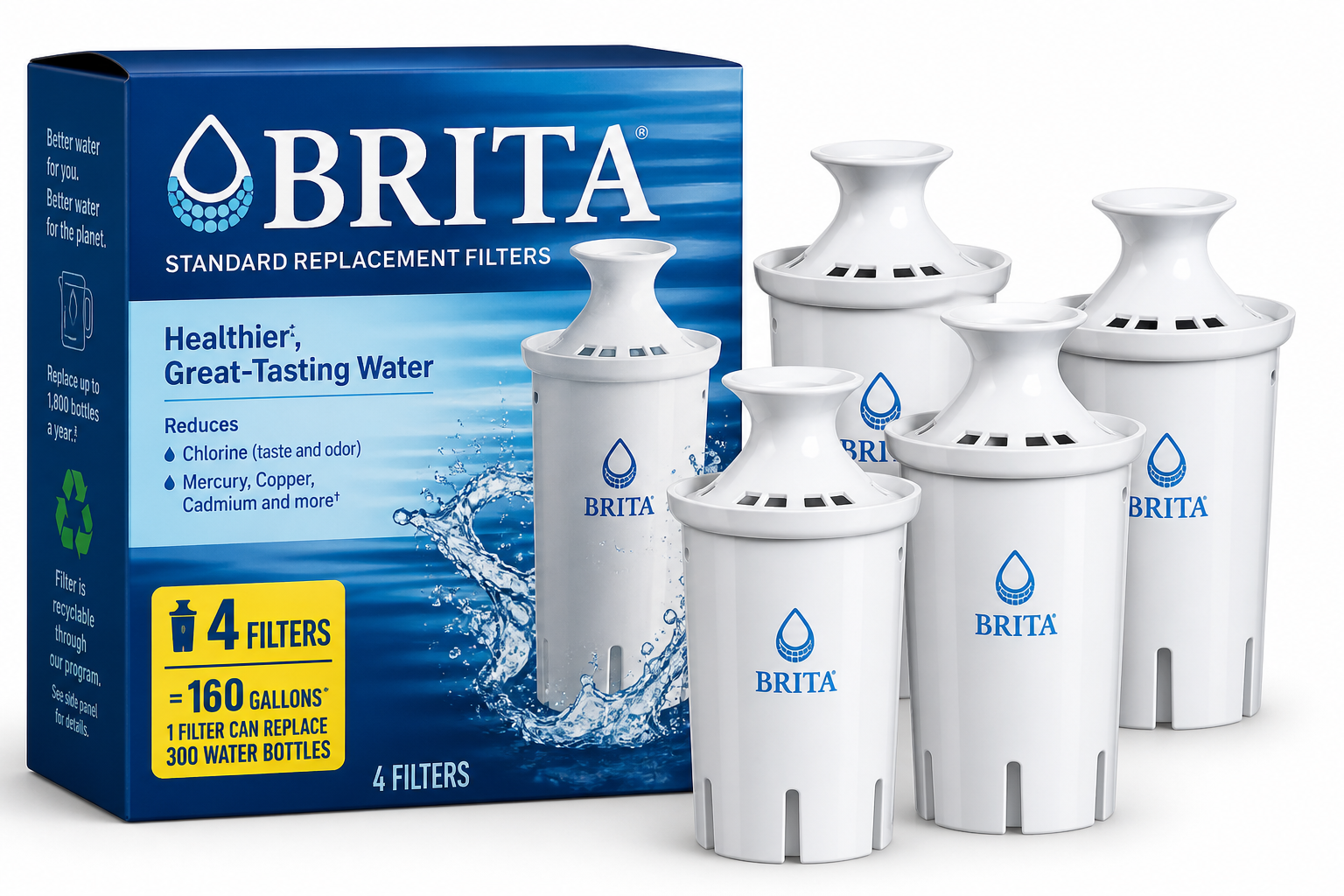
The Brita Standard Water Filter, Standard Replacement Filters for Pitchers and Dispensers, BPA Free, 4 Count is one of the most common entry points into home water filtration. Designed for Brita’s classic pitcher and dispenser systems, this pack provides four standard filters intended to improve the taste and basic quality of municipal tap water. Instead of promising heavy-duty purification, these filters focus on reducing chlorine taste and odor and lowering certain metallic impurities, aiming to make everyday drinking water more pleasant and consistent.
From households seeking an affordable alternative to bottled water to renters who cannot install under-sink systems, this 4-pack targets the broad middle ground: users who want better-tasting water with minimal effort and up-front cost.
If you’re looking at this specific 4-count pack on Amazon at $22.49, the key question is whether the performance and lifespan of each cartridge justify the ongoing replacement cycle.
Key Points
- Filter type and purpose: Granulated activated carbon and ion-exchange resin designed primarily for aesthetic improvement (taste, odor, clarity) and reduction of select metals, not full purification or pathogen removal.
- Contaminant reduction: Certified to reduce chlorine taste and odor and to reduce copper, cadmium, and mercury within specified limits when used with potable tap water.
- Capacity and lifespan: Rated for up to 40 gallons of water or about 2 months of use per filter for an average household, assuming typical daily consumption.
- Compatibility: Works with most Brita pitchers and dispensers, excluding Brita Stream systems that require a different cartridge format.
- BPA-free construction: The filter housing and materials are advertised as BPA-free, aligning with current safety expectations for food-contact plastics.
- Ease of setup: Quick-rinse preparation (about 15 seconds under cold water), drop-in installation, and straightforward replacement routine.
- Environmental angle: By relying on a refillable pitcher instead of bottled water, users can significantly cut single-use plastic bottle consumption over time.
Experience
Setup and Installation
Out of the box, each Brita Standard filter is individually sealed. Installation follows a simple routine:
- Remove the filter from its packaging and discard any protective caps or wrappers.
- Rinse the filter under cold tap water for roughly 15 seconds to flush loose carbon fines.
- Insert the filter into the reservoir of a compatible Brita pitcher or dispenser, aligning the grooves so it seats firmly.
- Fill the reservoir and let the first batch of water either pass through and discard or use according to Brita’s guidance and your own taste tolerance.
Most users report that after this initial rinse and one or two fills, any visible black carbon flecks are minimal to non-existent, and the water tastes noticeably different from straight tap water—typically cleaner and less chlorinated.
Filtration Performance in Daily Use
The Brita Standard filter is not intended to turn unsafe water into safe water. It assumes your municipal supply is already treated and microbiologically safe, and then refines it. In daily use, the improvements are most apparent in:
- Chlorine taste and odor: For many city water supplies, this is the single biggest flavor complaint. The activated carbon media effectively reduces chlorine, leading to a smoother, less “pool-like” taste.
- Metallic notes: In areas where plumbing or source water introduce low levels of copper or other metals, users often perceive reduced metallic or bitter flavors.
- General drinkability: Coffee, tea, and cold beverages made with filtered water usually taste more consistent, with fewer off-notes.
Because each filter is rated for around 40 gallons, households that drink a lot of water will see the indicator (or calendar reminder) come due fairly quickly. In a multi-person home where the pitcher is refilled several times a day, reaching the capacity in roughly two months is realistic. Smaller households may stretch this a bit longer, but Brita still recommends replacement on schedule to avoid gradual performance decline.
Long-Term Ownership and Cost per Gallon
The economic appeal of this 4-pack depends on how you look at it:
- Per-filter lifespan: At up to 40 gallons each, four filters cover up to about 160 gallons in total. For a family drinking several liters per day, this can equate to multiple months of filtered water.
- Cost per gallon: When you divide $22.49 by the rated total gallons (approximately 160), you arrive at a low cost-per-gallon figure relative to bottled water—especially premium bottled brands.
- Maintenance rhythm: Because these filters have a relatively short lifespan compared with Brita’s Elite (longer-lasting) filters, you will be replacing them more often. Some users prefer this routine because it’s simple, while others would rather pay more up-front for fewer changes.
For users tracking household budgets and environmental impact, the Brita Standard still compares favorably to single-use plastic bottles, both in cost and waste reduction, as long as you stick to the replacement schedule.
Pros
- Widely compatible: Works with nearly all standard Brita pitchers and dispensers (excluding Stream), making it easy to source replacements without worrying about fit.
- Noticeable taste improvement: Effectively reduces chlorine taste and odor, improving the flavor of tap water, coffee, tea, and cooking water.
- Certified contaminant reduction for common metals: Designed to reduce copper, cadmium, and mercury within specified performance standards when used with potable water.
- Straightforward installation and use: Quick-rinse prep and simple drop-in design make filter changes approachable for any household member.
- BPA-free construction: Meets current expectations for safe, food-contact plastics in water filtration products.
- Accessible entry price: Buying the 4-count pack at $22.49 provides a relatively low-cost way to maintain filtered water over several months.
- Environmental benefit vs. bottled water: Regular use can significantly reduce the number of single-use plastic bottles your household generates.
Cons
- Limited scope of filtration: Not designed to remove pathogens, heavy contamination, or all possible chemicals; it refines potable tap water rather than making unsafe water safe.
- Shorter lifespan than premium filters: At 40 gallons or about 2 months, these filters require more frequent replacement than longer-life alternatives like Brita’s Elite line.
- Performance depends on local water quality: In heavily contaminated or very hard water regions, the filter’s impact may feel limited, and you may need a more advanced system.
- Ongoing replacement commitment: You must remember to replace filters on schedule; ignoring the indicator or time guidelines can lead to diminished taste and reduced effectiveness.
- Plastic housing waste: While far better than disposable water bottles, each filter is still a plastic component that must eventually be discarded.
Verdict
The Brita Standard Water Filter, 4 Count remains a practical, well-balanced option for households that already have a compatible Brita pitcher or dispenser and primarily want better-tasting municipal tap water. Its strengths are ease of use, broad compatibility, and a clear, predictable replacement cycle. The filtration performance focuses on the issues most people actually notice day to day—chlorine taste, odor, and some metallic notes—rather than trying to be a comprehensive purification solution.
If you’re dealing with generally safe city water and want an affordable, low-effort upgrade in taste and consistency, this 4-pack is a sensible choice, particularly when considered on a cost-per-gallon basis at $22.49. However, if you need stronger contaminant removal, desire longer intervals between filter changes, or rely on a non-municipal water source with uncertain quality, you may want to pair this product with more robust treatment methods or explore higher-performance filters.
For most everyday users, though, the Brita Standard filter delivers exactly what it promises: convenient, reliable, and noticeably better-tasting water from a familiar pitcher or dispenser system.