
Introduction
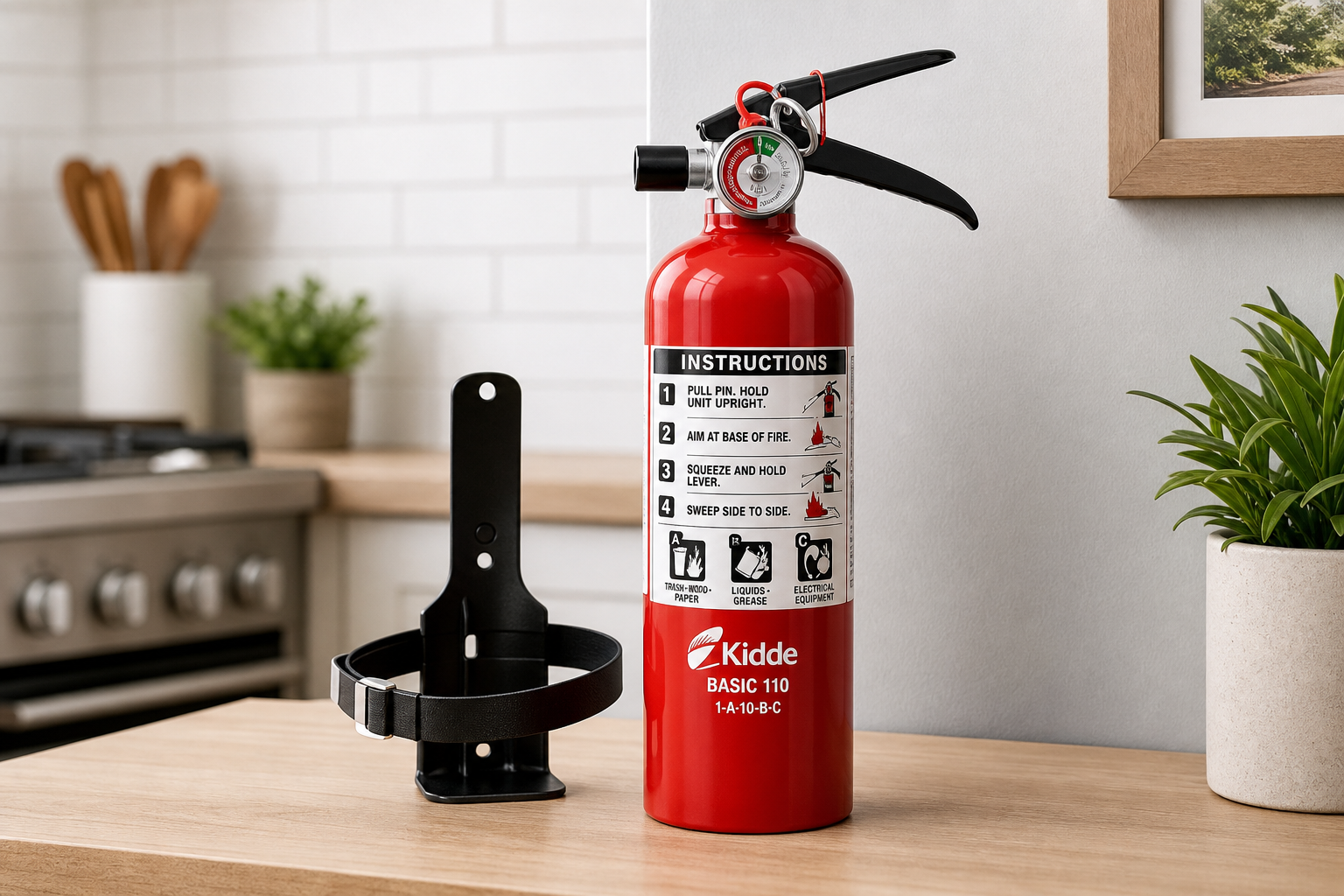
The Kidde Basic 110 Fire Extinguisher for Home (FA110G) is a small, single‑use, dry chemical extinguisher aimed at basic residential protection. With a 1-A:10-B:C UL rating and approximately 2.5 lb of extinguishing agent, it is designed to handle common household fires involving:
- Class A: wood, paper, textiles, trash
- Class B: flammable liquids like grease, gasoline, and some solvents
- Class C: energized electrical equipment
Kidde positions this extinguisher as a simple, low‑maintenance option for locations such as kitchens, utility rooms, hallways, and garages where space is limited but quick access is important.
If you’re looking for an affordable, compact fire extinguisher for a house, condo, or apartment, the FA110G is one of the most widely available options in big‑box stores and online, often around $19.97.
Setup / Getting Started
Mounting and placement
The FA110G typically ships with a strap‑style mounting bracket, allowing you to secure it to a wall, inside a closet, or near an exit. The cylinder uses a seamless aluminum body with a pressure gauge on the head, so you can quickly confirm it’s in the green before mounting.
Key setup steps:
- Choose a location near an exit, not directly over or right next to likely fire sources (e.g., not right above a stove). The idea is that you can reach the extinguisher while having a clear escape route behind you.
- Use the included strap bracket to mount to a stud or use appropriate wall anchors. Mounting it around chest height makes it easier to grab quickly.
- Record the purchase date on the body or in your home maintenance log. Kidde markets this series as having a long service life under normal conditions, but it’s still wise to check with local code or your insurer for any replacement interval they recommend.
- Make sure all household members know where the extinguisher is, how to remove it from the bracket, and how to operate it using PASS (Pull, Aim, Squeeze, Sweep).
Service‑free design
Unlike commercial rechargeable models, the FA110G is designed as a single‑use, disposable unit. There is no internal recharge or teardown servicing—once discharged or if the gauge moves out of the green zone, the unit should be replaced rather than refilled.
Daily Usage
In normal day‑to‑day life, you shouldn’t need to interact with the extinguisher much beyond periodic checks:
- Monthly visual checks: Confirm the pressure gauge is in the green, the tamper seal is intact, the nozzle is clear, and the body isn’t corroded or damaged.
- Accessibility: Make sure the extinguisher is not buried behind boxes, cleaning supplies, or pantry items.
- Familiarity: Walking household members through a quick PASS demonstration (without discharging) helps ensure they’re not reading instructions for the first time during an emergency.
In the event of a small, early‑stage fire that can be safely attacked:
- Assess safety first. If the fire is spreading rapidly, smoke is banking down, or you’re unsure you can put it out quickly, evacuate and call emergency services.
- If proceeding, remember PASS:
- Pull the pin.
- Aim low at the base of the fire.
- Squeeze the handle to discharge.
- Sweep side to side until the fire appears out.
- Back away carefully and watch for re‑ignition.
The 2.5 lb charge typically provides only a few seconds of discharge—enough for small, contained fires (a small trash can, a pan flare‑up, or an early electrical fire), but not for larger or well‑developed incidents.
Performance & Reliability
UL rating and fire coverage
The 1-A:10-B:C rating provides a useful indication of capability:
- 1-A: Equivalent to about 1.25 gallons of water effectiveness on ordinary combustibles. This is modest and reflects the extinguisher’s small size.
- 10-B: Suitable for flammable liquid fires covering up to about 10 square feet.
- C: Safe for use on energized electrical equipment (the agent is non‑conductive when properly applied).
This rating is common for 2.5 lb residential ABC extinguishers. It’s appropriate for:
- Kitchens (mounted near but not over the stove)
- Laundry rooms
- Small workshops or hobby areas
- Bedrooms or hallways as a secondary unit
Agent and construction
The FA110G uses a multipurpose dry chemical (ABC) powder, which is effective but can be messy after discharge. The cylinder is aluminum with a metal valve/handle assembly on recent versions, designed to resist corrosion in typical indoor environments.
Most users will appreciate:
- Light overall weight (around 3–4 lb total, including agent), making it manageable for most adults and many older kids or teens.
- A clear pressure gauge that’s easy to read at a glance.
Reliability considerations
For household use, the FA110G is generally considered reliable if:
- Stored in a moderate temperature range (avoid extreme heat, freezing, or direct sunlight).
- Checked periodically to ensure the gauge remains in the green.
Because it’s disposable, there’s no expectation of periodic professional recharging. However, some owners who prefer a long‑term, serviceable solution might opt for a larger, rechargeable 4–5 lb unit elsewhere in the home and keep the FA110G as a smaller backup.
What Works Well
-
Compact and lightweight
At 2.5 lb of agent and a relatively slim cylinder, the FA110G is easy to store in tight spots and simple to handle, even for less‑strong users. -
Covers the main residential fire classes
The ABC dry chemical design means a single extinguisher can address typical house fires involving combustibles, liquids/grease, and electrical equipment. -
Straightforward operation
The familiar pin‑and‑handle layout and readable gauge make it intuitive to use for anyone trained on basic PASS technique. -
Includes mounting hardware
The supplied strap bracket makes it easy to get the extinguisher off a countertop and onto a wall, which improves both safety and accessibility. -
Widely available and typically budget‑friendly
The FA110G is sold in many hardware, home‑improvement, and online stores. Pricing is generally competitive for an entry‑level home extinguisher, and it’s often sold individually or in multi‑packs around $19.97 per unit, depending on retailer and promotions.
What Could Be Improved
-
Single‑use, non‑rechargeable design
After one discharge—or if the pressure gauge drops out of the green—the extinguisher must be fully replaced, which can generate more waste and may be less economical over a long period than a rechargeable unit. -
Limited capacity and discharge time
As a 2.5 lb extinguisher, it provides only a short burst of agent, making it best for very small, early‑stage fires. For garages, workshops, or areas with higher fuel loads, a larger 4–10 lb extinguisher with a higher rating is often recommended. -
Dry chemical cleanup
ABC powder is effective but can be dusty and intrusive. Cleanup from a discharge in a kitchen or living room can be time‑consuming, and the powder may affect electronics or appliances if it enters vents or crevices. -
Basic bracket
The included strap bracket is functional but fairly simple. Users who want more robust mounting—especially in vehicles, boats, or vibration‑prone environments—may prefer to upgrade to a heavier‑duty bracket compatible with this size cylinder.
Overall Impression
The Kidde Basic 110 (FA110G) is a practical, entry‑level ABC dry chemical fire extinguisher that fits well into typical residential safety plans. Its 1-A:10-B:C rating, modest size, and simple operation make it suitable for apartments, smaller homes, and as a secondary unit near higher‑risk areas like kitchens or laundry rooms.
Buyers should be aware of its limitations in capacity and the single‑use, disposable design. For many households, the best approach is to pair one or more FA110G units with a larger, rechargeable extinguisher in the garage or main living level. Used this way, the FA110G serves as a convenient, easy‑to‑grab first line of defense for small, incipient fires, while larger extinguishers or quick evacuation handle more serious events.
If you want an uncomplicated, widely available home extinguisher from an established brand at around $19.97, the Kidde Basic 110 FA110G is a sensible starting point—provided you understand that it’s meant for small fires only and integrate it into a broader home fire‑safety plan that includes alarms, clear exits, and an agreed‑upon evacuation strategy.