
Introduction
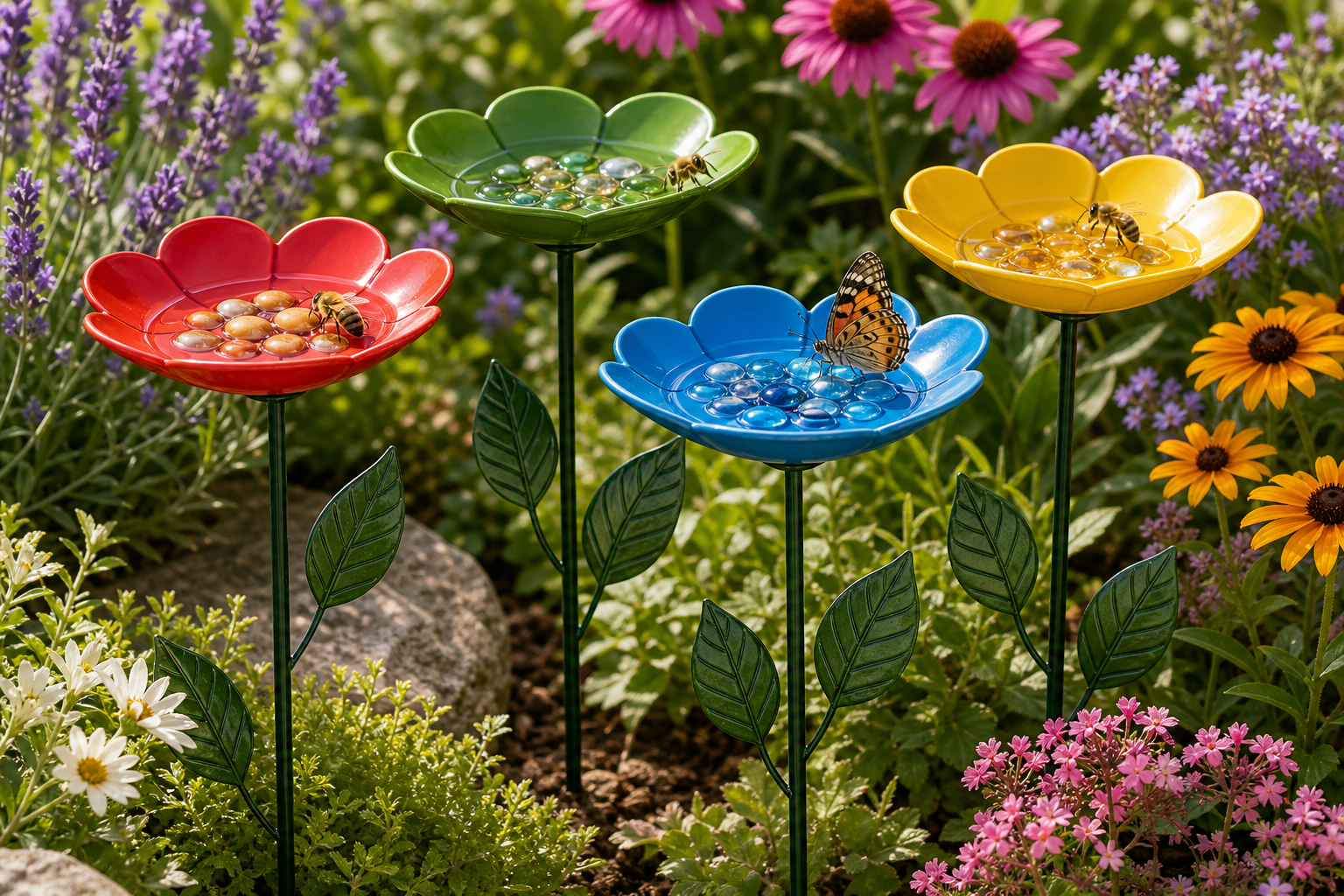
The Retyion 4 Pack Bee Watering Station is a garden accessory aimed at anyone wanting to support bees, butterflies, and other beneficial insects with a safe water source while adding color to outdoor spaces. Each set includes four metal stakes topped with shallow, flower-shaped bowls in red, green, blue, and yellow, intended to be filled with water (optionally with pebbles or marbles) so pollinators can drink without risk of drowning.
Available for around $17.83, this set positions itself as a decorative yet functional upgrade over improvised saucers or DIY trays. In this review, we’ll explore where it shines, how it performs in real-world garden scenarios, and what trade-offs come with its design and materials.
Typical Use Cases
1. Home Gardens and Flower Beds
These bee watering stations are primarily designed for installation in:
- Perennial flower borders and mixed beds
- Cottage gardens with dense blooms
- Herb gardens near flowering plants like lavender, thyme, or oregano
Here, the main goal is to give foraging bees and butterflies a shallow, easily accessible water source close to nectar-rich flowers, while the colorful flower heads blend with existing plantings.
2. Vegetable Plots and Pollinator-Friendly Yards
Vegetable gardeners often rely heavily on pollinators. These stations can be placed:
- At the edges of raised beds
- Near crops like squash, tomatoes, cucumbers, and berries
- Along paths where pollinators already fly through
In these settings, the bee baths serve as part of a broader pollinator-support strategy that may also include native flowers, reduced pesticide use, and nest habitats.
3. Patios, Balconies, and Container Gardens
Because each station is stake-mounted and relatively compact, they also suit:
- Large patio containers and planters
- Balcony rail planters
- Small courtyard gardens with limited ground space
Containers can be grouped to create a small pollinator oasis where in-ground planting isn’t possible.
4. Decorative Garden Accents
Beyond functionality, the four-color pack is intended as decor:
- Accent pieces among ornamental grasses or low groundcovers
- Visual focal points in otherwise green-dominant beds
- Seasonal decor additions for spring and summer displays
The flower-shaped bowls make them look like part of the planting, not a separate, utilitarian feeder.
Performance in Each Scenario
Performance in Flower Beds and Mixed Borders
In densely planted beds, the Retyion stations perform well due to their stake design:
- Placement flexibility: The slim metal stakes can be pushed between plants without disturbing roots too much.
- Visual integration: The flower shapes and bright colors blend with surrounding blooms, making them look intentional rather than improvised.
- Accessibility for pollinators: When set slightly above foliage, bees and butterflies can easily spot the bowls and land.
However, success here depends heavily on bowl depth and water management. The shallow design is good for safety, but water evaporates quickly in full sun, requiring regular refilling in hot weather.
Performance in Vegetable Gardens
In vegetable beds, these stations work best when:
- Placed a short distance from hives or wild nesting sites, not directly adjacent, to encourage bees to use them naturally.
- Situated near heavily visited plants (such as squash blossoms) where bees are already foraging.
The bright colors help visibility, and the metal stakes provide enough stability for typical garden soil. As long as the cups are kept clean and refilled, they function as a convenient hydration source for pollinators working the crops.
One limitation is that the bowls are relatively small, so they suit micro-habitat support rather than being the primary water source for a large number of hives.
Performance on Patios and Balconies
In containers and balcony planters, performance is mixed but generally positive:
- Pros:
- Easy to stake into potting mix.
- Compact enough for smaller planters.
- Visually pleasing where flowers may be sparse.
- Cons:
- Containers in full sun heat up and dry out quickly, so cups must be checked very frequently.
- Lightweight containers can shift in high winds, so the combination of pot and stake needs enough weight for stability.
For urban gardeners, though, they provide a simple way to support pollinators even without a full yard.
Performance as Pure Garden Decor
From a decorative standpoint, the set performs strongly:
- The four-color variety allows for symmetrical or staggered arrangements.
- Metal stems and flower heads have a more substantial look than many plastic alternatives.
- When grouped, the stations create a coordinated look instead of random saucers scattered around.
If the primary goal is aesthetic with a secondary benefit for pollinators, the product fits that niche well.
Strengths Across Scenarios
1. Pollinator-Safe Water Depth
The shallow flower bowls are intentionally designed so bees and butterflies can drink without falling into deep water. When paired with pebbles, glass beads, or small rocks, each station becomes a low-risk landing platform, particularly for tired or heat-stressed insects.
2. Decorative, Garden-Friendly Design
Key design strengths include:
- Flower-shaped bowls that mimic real blooms.
- Multiple colors (red, green, blue, yellow) for visual interest.
- Leaf details on the stems adding a more finished look.
These touches help the stations feel like part of the garden rather than an add-on.
3. Compact, Flexible Placement
Because each unit is relatively small and stake-mounted, they can be:
- Inserted among existing perennials without major rearrangement.
- Used in containers, narrow strips, or small patio beds.
- Easily repositioned as you observe where bees prefer to drink.
This flexibility is valuable for finding the right microclimate—often bright but not scorching full sun, with some shelter from wind.
4. Low Maintenance Materials
The combination of metal stakes and hard, wipeable bowls makes routine care straightforward:
- Algae or dirt can be scrubbed off with a brush and mild soap (rinse thoroughly afterward).
- Metal stems are less likely to snap than thin plastic rods.
With periodic cleaning and occasional touch-up to any chipped paint, the stations should remain usable over multiple seasons.
5. Value as a Multi-Pack
Getting four stations in a single bundle allows you to:
- Distribute water sources around the yard or garden.
- Experiment with different heights and locations.
- Keep a spare or two as backups if one is damaged.
This multi-pack approach also improves perceived value at around $17.83 for the set, compared to buying individual decorative cups.
Limitations Across Scenarios
1. Limited Capacity and Frequent Refilling
Each bowl is relatively small and shallow. While ideal for safety, this means:
- Water evaporates quickly in hot, dry, or windy conditions.
- Daily or even twice-daily checks may be necessary during heat waves.
- The stations are not suited as the sole water source for larger managed hives; they’re better as supplementary hydration points.
Users looking for more hands-off solutions may need to pair these with larger basins or self-refilling systems.
2. Exposure to Weather and Wear
As with any painted outdoor metal decor:
- Prolonged sun and rain can cause fading or chipping of the paint over time.
- In colder climates or areas with heavy storms, bringing the stations indoors off-season or during severe weather can extend their life.
While this is typical for this category, buyers should expect some cosmetic aging over multiple seasons.
3. Stability in Loose or Rocky Soil
In very loose soil, gravel, or shallow planters:
- The stakes may not anchor as firmly as in dense garden loam.
- Strong gusts or accidental bumps can tilt or shift them.
Ensuring the stakes are pressed deeply into soil, or adding support stones at the base, helps mitigate this.
4. No Built-In Anti-Mosquito Features
Because the bowls are open water surfaces:
- Stagnant water can attract mosquito larvae if left unchanged for extended periods.
Routine maintenance—refreshing water frequently and scrubbing surfaces—reduces this issue but requires user diligence.
5. Decorative Style May Not Suit All Gardens
The bright, colorful, stylized flowers will appeal to some gardeners but may feel out of place in:
- Very minimalist, modern landscapes.
- Naturalistic or woodland gardens where more muted tones are desired.
Those seeking ultra-discreet watering solutions might prefer more neutral or stone-like designs.
Verdict
The Retyion 4 Pack Bee Watering Station is a thoughtfully designed, decorative option for gardeners who want to support pollinators while enhancing the look of their outdoor spaces. The shallow flower bowls, metal stems, and bright colors work well in flower beds, vegetable gardens, and container setups, making it easy to add multiple safe drinking spots around the yard.
Its main strengths are pollinator-friendly depth, flexible placement, and attractive design. The key trade-offs are the small water capacity, need for regular refilling and cleaning, and the natural wear that comes with painted metal in outdoor conditions.
If you:
- Already grow pollinator-friendly plants,
- Don’t mind checking and refilling water regularly,
- And appreciate colorful garden decor that doubles as functional habitat support,
then this set offers good value at approximately $17.83 for four stations.
On the other hand, beekeepers managing larger apiaries or gardeners seeking very low-maintenance, high-capacity water sources may want to pair these decorative stations with larger basins or more robust watering systems.
Overall, for small to medium gardens and decorative pollinator-friendly spaces, the Retyion 4 Pack Bee Watering Station is a practical, visually appealing choice that can help make your garden more hospitable to bees, butterflies, and other beneficial insects.