
Overview
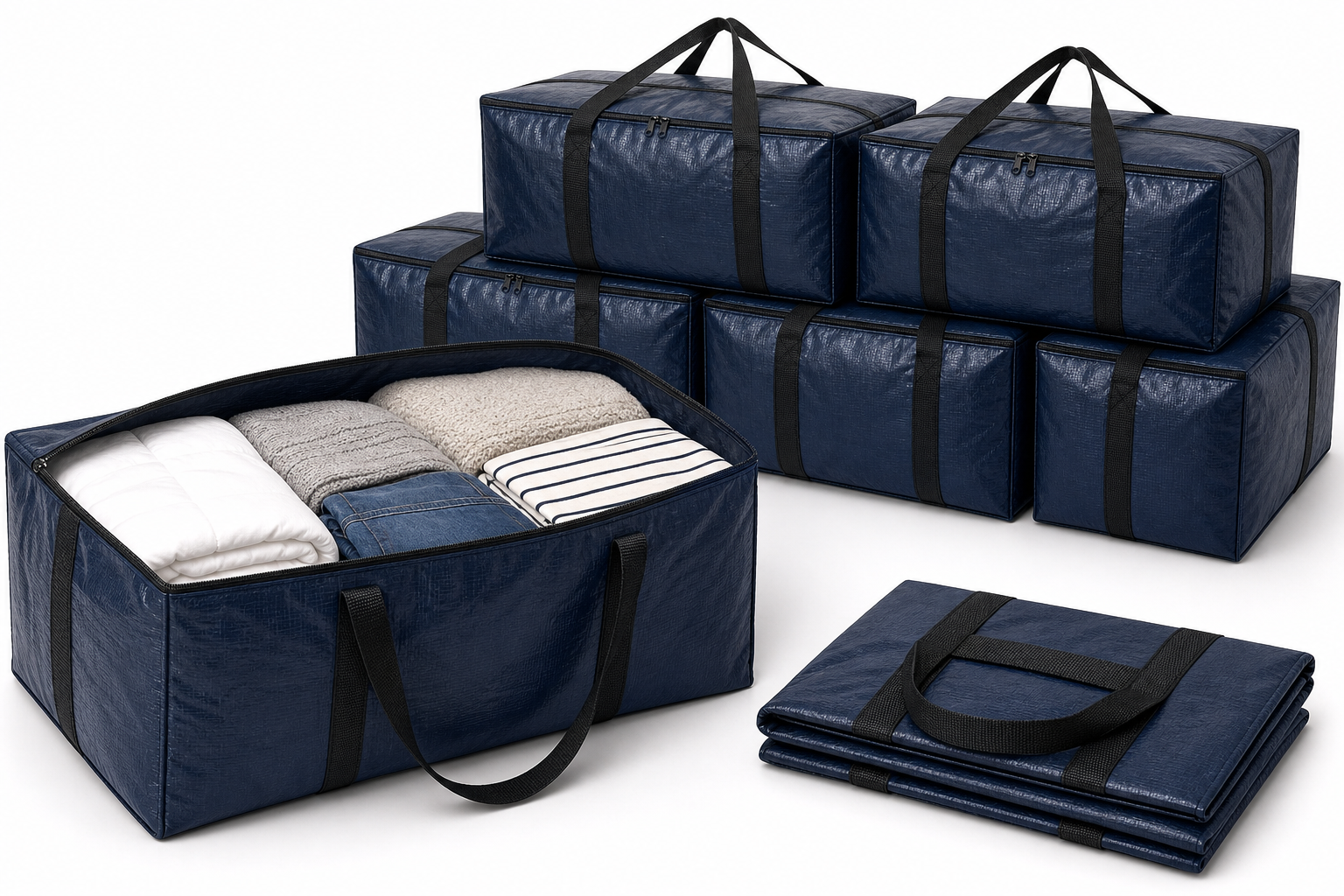
The 6 Pack Extra Heavy Duty Large Moving Bags in dark blue are designed as a reusable, space‑saving alternative to bulky cardboard boxes. Each bag is made from thick coated PE fabric with reinforced stitching, a full‑length zipper, and wrap‑around webbing handles intended to support heavy loads such as bedding, clothing, and college supplies.
Sized at roughly 29" L x 14" W x 13" H, each bag offers a large, box‑like shape that is easier to stack than typical duffel bags while still folding flat when not in use. For buyers who want a more organized, weather‑resistant way to pack up a dorm, apartment, or seasonal closet, these bags aim to strike a balance between capacity and durability.
From a value perspective, a 6‑pack at around $26.99 on Amazon positions these bags competitively against both traditional moving boxes and other heavy‑duty storage totes in the same category.
Key Highlights
- Heavy‑duty material: Upgraded thick coated PE fabric designed to resist tearing and punctures during moves.
- Large, box‑like capacity: Approx. 29" × 14" × 13" per bag (around 23 gallons), suitable for bulky linens and clothing.
- Reinforced handles: Wide, wrap‑around webbing handles intended to carry loads of about 60–65 lb when packed sensibly.
- Full‑length zipper: Wide‑opening zipper for easier loading and unloading of bulky items.
- Water‑resistant exterior: Helps protect contents from light rain, damp truck beds, or spills.
- Foldable design: Bags collapse flat for compact storage when not in use.
- Multi‑purpose usage: Suitable for moving, attic or basement storage, college dorm packing, and off‑season clothing.
Core Features
Build and Materials
These bags use an extra‑thick coated PE (polyethylene) fabric similar to what’s found in other premium moving totes. This material is:
- Sturdier than thin plastic or lightweight fabric often found in budget moving bags.
- Resistant to surface moisture, dust, and dirt, making it well‑suited to truck beds, garage floors, or storage units.
- Easy to wipe down with a damp cloth after a move.
Stitching is reinforced at stress points, especially around the handles and zipper ends, to help prevent blowouts when the bags are heavily loaded.
Capacity and Dimensions
With dimensions of approximately 29" L x 14" W x 13" H, each bag offers generous volume in a rectangular footprint that mimics the shape of a moving box. This makes the bags:
- Easy to stack in a car trunk, SUV, or moving truck.
- Large enough for bulky items, such as comforters, pillows, winter coats, and multiple pairs of shoes.
- Versatile for storage, fitting neatly on shelving units or under lofted beds in dorm rooms.
For most users, one bag can handle the contents of several dresser drawers or a full set of bedding (sheets, blanket, and pillows) with room to spare.
Zipper Design
A full‑length, wide‑opening zipper runs across the top of each bag. This design is practical for:
- Packing bulky textiles without compressing them awkwardly.
- Quick visual access, since you can open the top widely to see what’s inside.
- Easier loading and unloading than narrow side‑zipped luggage.
As with any heavy‑duty storage bag, the zipper is a potential failure point if over‑stuffed or forced closed under strain. These bags feel robust relative to typical budget moving totes, but careful packing is still important.
Handles and Carrying Comfort
The handles are wide webbing straps that wrap around the bottom of the bag rather than being attached at only a few points. This wrap‑around design distributes weight more evenly and reduces stress on any single seam.
Key benefits:
- Improved durability when carrying heavier loads.
- More comfortable grip, especially when wearing gloves.
- Two‑hand or shoulder carry is possible depending on your height and how full the bag is.
While they are more comfortable than thin nylon straps, they are still soft webbing without added padding, so carrying very heavy loads for long distances can still be tiring.
Foldability and Storage
When empty, each bag folds down into a relatively flat bundle. Unlike rigid plastic totes or cardboard boxes, they do not consume much space when not in use. This is useful for:
- Apartment dwellers who lack storage space for stacks of empty boxes.
- College students who need to stow the bags under a bed or in a closet between semesters.
Usage Experience
Packing and Organization
In practice, these bags excel at soft goods and irregularly shaped items. Typical use cases include:
- Clothing (folded or rolled) for an entire closet.
- Bedding sets, throw blankets, and pillows.
- Towels, curtains, and table linens.
- Dorm essentials: small appliances in their boxes, shoes, and miscellaneous supplies.
The wide‑opening zipper and boxy shape make it easy to pack items neatly. Users who organize by room or by person (e.g., one bag per child or per bedroom) can label the bags with tags or tape for quick identification.
Transport and Handling
When properly packed, the bags are straightforward to move:
- Short trips: Carrying from apartment to elevator or car is manageable for one person per bag.
- Truck loading: The rectangular shape allows stacking in two or three layers without excessive slumping.
- Stairs: Heavier bags may require two people, one on each handle set, to reduce strain and avoid dragging.
Because they are flexible, they are less ideal for very fragile items unless you add internal padding or boxes. For breakables, a combination of these bags for soft goods and rigid boxes for fragile items works best.
Durability Over Time
With normal home use (occasional moves, seasonal swapping of clothes or decor), the materials and stitching should hold up well over multiple years. The main wear points to watch are:
- Zipper tracks and pull tabs if bags are routinely overfilled.
- Handle attachment points if bags are lifted by one handle under heavy loads.
Folding and unfolding does not significantly stress the fabric, so storage in between uses should not be a concern.
Strengths
- Robust construction: Thick coated PE fabric with reinforced stitching stands up to typical moving and storage stresses.
- High capacity per bag: Large, box‑like dimensions accommodate bulky items and efficient packing.
- Reusable and space‑saving: Fold flat between moves, unlike cardboard boxes that must be stored or discarded.
- Water‑resistant exterior: Better protection than bare cardboard in damp conditions.
- Comfortable, wrap‑around handles: More secure and stable under load than simple stitched side handles.
- Versatile use cases: Effective for dorm moves, apartment relocations, off‑season storage, and organizing basements or attics.
- Good value in a 6‑pack: A set of six provides enough capacity for many small apartments or dorm room setups at around $26.99.
Weaknesses
- Not rigid like boxes: Flexible sides can sag if not fully packed, making perfectly neat stacking more challenging.
- Limited protection for fragile items: No internal padding; breakables still require boxes, bubble wrap, or foam.
- Can become very heavy: When completely full of books or dense items, each bag may be difficult for one person to carry safely.
- No internal dividers or pockets: Organization inside the bag relies on how you pack; smaller items may shift during transport.
- Zipper care required: For maximum lifespan, bags should not be overstuffed to the point where zippers are forced closed under tension.
Suitable Scenarios
These moving bags are particularly well‑suited for:
- College students and parents: Packing clothes, bedding, and dorm supplies at the start and end of each semester.
- Apartment and condo moves: When elevator access and tight hallways make bulky boxes inconvenient.
- Seasonal storage: Swapping winter and summer wardrobes or storing holiday decor in closets, garages, or storage units.
- Car‑based moves: Packing trunks, hatchbacks, and SUVs where flexible bags can make better use of irregular space.
- Short‑term or frequent movers: Renters who relocate every year or two and want reusable, compact packing gear.
They are less ideal if your primary need is long‑term storage of very fragile items, or if you prefer rigid containers that can be stacked in tall, perfectly uniform columns.
Final Evaluation
The 6 Pack Extra Heavy Duty Large Moving Bags in dark blue offer a strong mix of durability, capacity, and convenience for anyone seeking a reusable alternative to cardboard boxes. The thick coated PE fabric, wrap‑around handles, and large, stackable profile make them well‑suited to moving clothing and linens, organizing dorms, and handling seasonal storage.
While they do not replace rigid boxes for delicate or highly fragile belongings, they excel at transporting and storing soft goods and everyday items with far less waste and clutter than disposable boxes. For households or students planning an upcoming move who prioritize reusability, space‑saving storage, and straightforward packing, this 6‑bag set at around $26.99 on Amazon is a practical, well‑rounded option worth considering.