
Product Summary
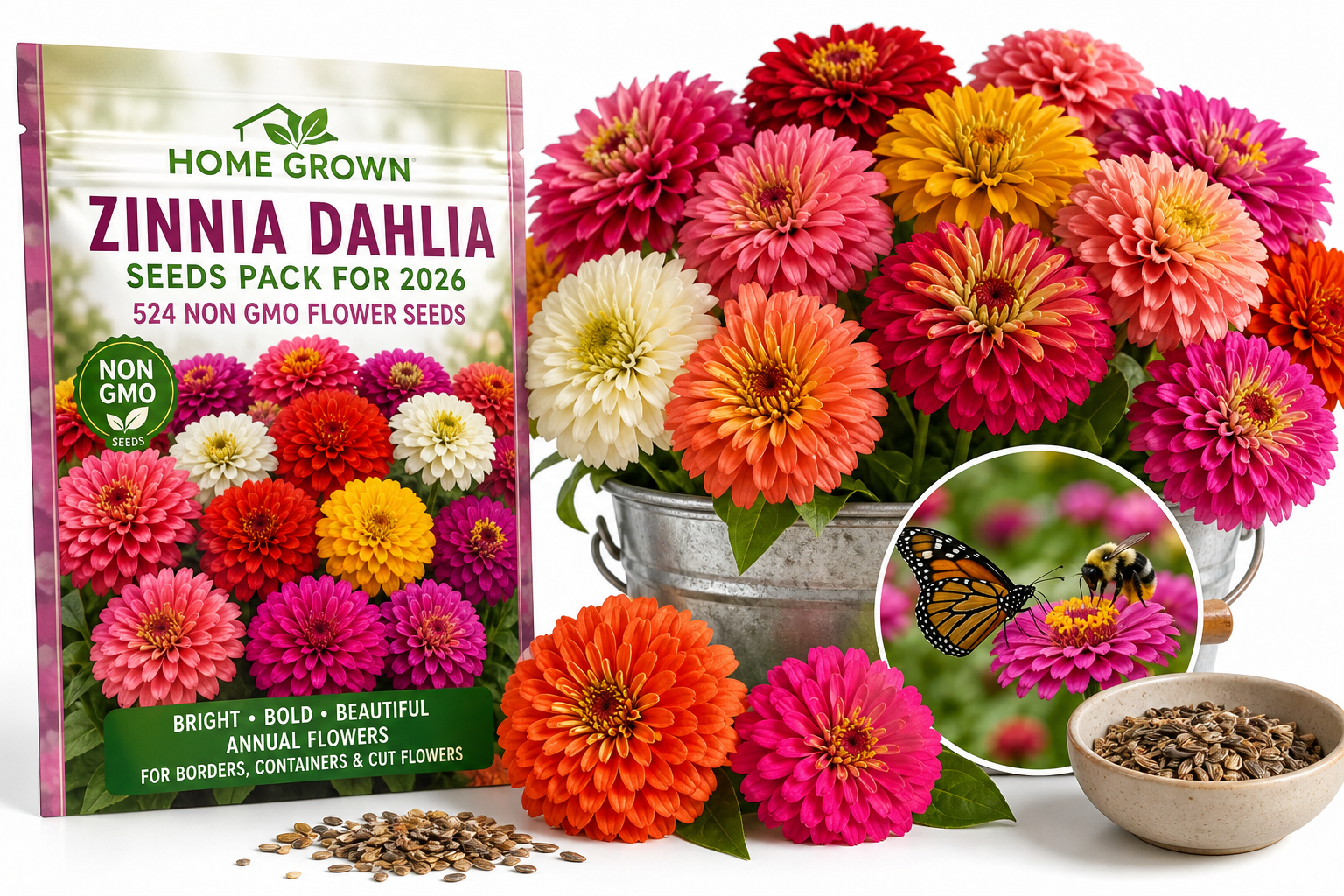
The HOME GROWN Zinnia Dahlia Seeds Pack for 2026 – 524 Non GMO Flower Seeds is a mixed zinnia elegans blend bred to resemble dahlia‑style blooms. The pack includes approximately 524 seeds intended for the 2026 growing season, offering a range of bright colors and full, layered flowers suitable for borders, beds, and containers.
These are annual flowers that typically bloom heavily through summer into fall in full sun, attracting bees, butterflies, and other pollinators. The seeds are described as non‑GMO and aimed at home gardeners who want showy, cut‑flower‑worthy blooms without complex care requirements.
While pricing fluctuates, the pack is generally positioned as an accessible, budget‑friendly way to fill a garden with high‑impact color at around $5.59.
Target Users
This seed pack is best suited for:
- Beginner gardeners who want forgiving, fast‑growing flowers that don’t require specialized skills.
- Homeowners with sunny yards looking to fill beds, borders, and edges with bold color all season.
- Container gardeners who have patios, balconies, or small urban spaces but still want large, vibrant blooms.
- Pollinator gardeners aiming to support bees, butterflies, and other beneficial insects with nectar‑rich flowers.
- Cut‑flower enthusiasts who want long stems and large blossoms for indoor arrangements.
- Budget‑conscious gardeners seeking a high seed count (over 500 seeds) in a single pack to cover a sizable area at a modest cost like $5.59.
Main Benefits
1. High Visual Impact
The dahlia‑style zinnia mix is bred for full, layered blooms with bold colors. Planted in groups, they create a dense display that can quickly become a focal point in the garden.
2. Pollinator Friendly
Zinnias are widely recognized as excellent pollinator plants. A large patch can attract bees, butterflies, and other beneficial insects, making this pack a good choice for wildlife‑friendly gardens.
3. Easy to Grow from Seed
Zinnias generally germinate reliably and grow quickly in warm conditions with full sun and well‑draining soil. For most regions in the U.S., they can be direct‑sown after the last frost or started indoors a few weeks earlier to extend the bloom period.
4. Versatile Garden Uses
- Borders and beds: Tall, showy flowers line pathways or frame vegetable gardens.
- Containers: With regular watering and feeding, they can thrive in large pots on patios.
- Cut flowers: Long stems and bold blooms make them ideal for bouquets and arrangements.
5. Non‑GMO Seed
For gardeners who prioritize non‑GMO inputs, this pack clearly emphasizes that the seeds are non‑GMO, aligning with many home gardeners’ preferences.
Key Considerations
Before purchasing, keep the following in mind:
-
Climate and Frost Dates
Zinnias are warm‑season annuals. They are not frost tolerant, so seeds should be sown outdoors only after all risk of frost has passed. In cooler climates with short summers, starting seeds indoors 4–6 weeks before the last expected frost can help ensure a full bloom period. -
Full Sun Requirement
Zinnias need full sun (generally 6+ hours of direct sunlight per day) for best color and bloom production. In partial shade, plants may become leggy and produce fewer flowers. -
Spacing and Airflow
Like many dense‑flowering annuals, closely packed zinnias can be susceptible to powdery mildew and other fungal issues, particularly in humid climates. Proper spacing, good airflow, and avoiding overhead watering in the evening help reduce issues. -
Annual, Not Perennial
Zinnias complete their life cycle in a single season. They will not return the following year unless you allow some flowers to go to seed and self‑sow or collect and replant the seeds yourself. -
Mixed Colors and Forms
As a mixed pack, you’ll get a variety of colors and flower forms that approximate dahlia‑style blooms rather than a single, uniform type. Gardeners expecting identical plants across the bed may prefer a single‑variety zinnia instead. -
Seed Count vs. Garden Size
With 524 seeds, this pack can cover a modest to medium‑sized garden when thinned properly. If you’re planning a very large cut‑flower patch or landscape‑scale planting, you may need multiple packs.
Pros
- High seed count (524 seeds) provides coverage for a generous planting area.
- Vibrant, dahlia‑style blooms that add strong color and texture to the garden.
- Pollinator‑friendly flowers that attract bees and butterflies.
- Non‑GMO designation appeals to gardeners concerned about seed sourcing.
- Beginner‑friendly, with straightforward direct‑sowing and germination in warm soil.
- Versatile uses for borders, beds, containers, and cut‑flower arrangements.
- Season‑long color when deadheaded regularly and provided with consistent moisture.
- Typically good value for the seed count at the approximate price point of $5.59.
Cons
- Annual only – plants will not overwinter; new seeds must be sown each year.
- Requires full sun for best results; shaded sites will underperform.
- Potential for powdery mildew in humid climates if plants are overcrowded or watered overhead late in the day.
- Mixed pack variability – bloom size, color, and form will vary; not ideal if you want a strictly uniform bed.
- Requires thinning after germination to achieve strong, healthy plants, which some beginners may find tedious.
Alternatives
If you like the general idea of colorful, easy‑to‑grow annuals but want a slightly different experience, you might consider:
-
Other zinnia mixes
Single‑variety or color‑themed zinnia packs (for example, all‑giant, all‑dwarf, or a specific color range) can give a more uniform appearance if design consistency is important. -
Mixed wildflower blends
Pollinator‑oriented wildflower seed mixes often include multiple species (such as cosmos, coreopsis, and poppies) for a more naturalistic meadow look, though they tend to be less uniform and slightly less predictable than a dedicated zinnia patch. -
Compact or dwarf zinnias
If you’re planting primarily in containers or have very limited space, dwarf zinnia varieties stay shorter and denser, making them easier to maintain on patios and balconies. -
Other easy annuals
Marigolds, cosmos, and snapdragons are also popular, beginner‑friendly annuals that offer reliable color and can be used alongside or instead of zinnias.
These alternatives don’t replace the specific dahlia‑style look of the HOME GROWN pack but can complement it or better suit certain design and space constraints.
Conclusion
The HOME GROWN Zinnia Dahlia Seeds Pack for 2026 delivers a high seed count, vivid dahlia‑style blooms, and pollinator‑friendly performance in a format that’s accessible to beginners and rewarding for more experienced gardeners. As long as you can provide full sun, warm conditions, and basic care such as thinning, watering, and occasional deadheading, this pack offers an efficient way to transform garden beds, borders, and containers into a long‑lasting display of color.
For gardeners seeking non‑GMO flower seeds and a reliable, showy annual that doubles as a cut flower and pollinator magnet, this product is a strong candidate, especially at an accessible price point like $5.59.