
Overview
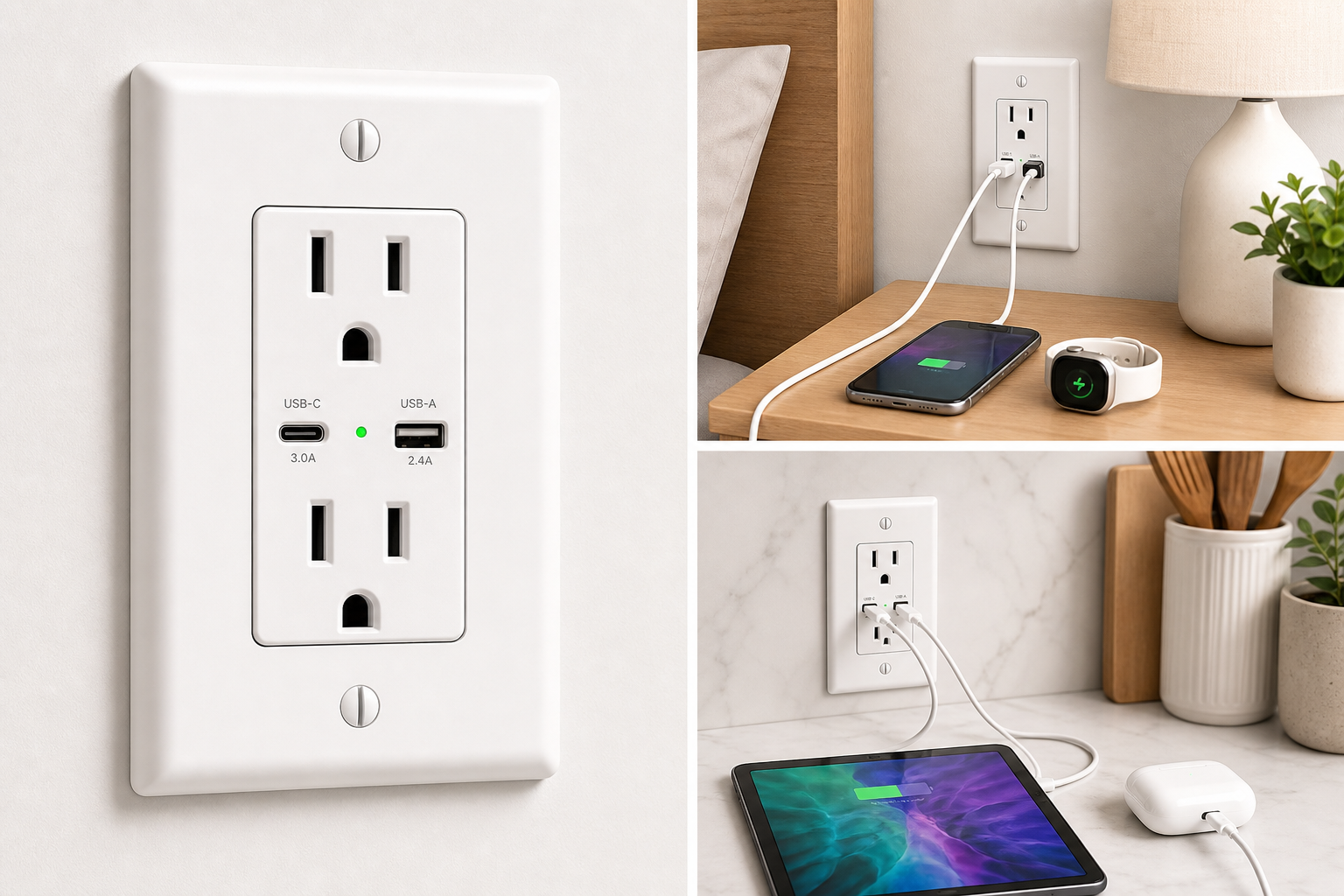
The product associated with ASIN B0FKY13ZB9 is a wall-mounted charging solution that combines traditional AC outlets with integrated USB-C and USB-A ports. Instead of relying on separate plug-in chargers, this unit is designed to replace a standard wall receptacle so phones, tablets, and other small electronics can be charged directly from the outlet.
While exact wattage and port configuration vary by model, this type of outlet typically targets users who want a cleaner, more permanent charging setup for home offices, kitchens, bedrooms, and shared family areas. For buyers comparing it to add‑on USB wall adapters, the main advantages are tidier cable management, always-available charging ports, and the possibility of faster USB-C charging where supported.
From a value perspective, this outlet sits in the mid-range of smart-charging hardware at around $116.99, making it accessible as a minor home upgrade rather than a major renovation expense.
Key Highlights
- All-in-one wall outlet: Combines standard AC receptacles with built-in USB-C and USB-A charging ports.
- Space-saving design: Frees up AC sockets that would otherwise be blocked by bulky wall chargers.
- Cleaner cable management: Reduces the need for external adapters and multi-port chargers on desks or bedside tables.
- Permanent installation: Installs in place of a standard outlet for a more seamless, integrated solution.
- Broad device compatibility: Suitable for phones, tablets, earbuds, e-readers, and other small USB-powered devices.
These highlights make the product particularly appealing to users who want to declutter charging areas without investing in more complex smart-home power systems.
Core Features
Integrated USB-C and USB-A Ports
The standout feature is the inclusion of one or more USB-C and USB-A ports directly on the outlet face. USB-C support is especially useful for newer smartphones, tablets, and accessories that can charge more quickly and efficiently than via legacy USB-A ports.
Key functional benefits:
- USB-C port(s) for modern devices and potentially faster charging when paired with compatible electronics.
- USB-A port(s) for backward compatibility with existing cables and older accessories.
- Simultaneous charging of multiple devices without tying up AC sockets.
Standard AC Receptacles
Alongside the USB ports, the outlet maintains standard AC receptacles for lamps, laptops, small appliances, and other plug-in devices. The goal is to provide extra charging capacity without sacrificing everyday power usage.
Form Factor and Aesthetics
The unit is designed to fit into a standard electrical box and to be covered by an included or existing wall plate. Typical design elements include:
- A low-profile face that doesn’t protrude significantly from the wall.
- Clearly labeled USB ports for quick identification.
- Neutral color options (commonly white) to blend with typical interior finishes.
Safety and Protection
Many outlets in this category incorporate standard safety provisions such as:
- Overcurrent and short-circuit protection for the USB ports.
- Compliance with standard electrical codes when installed correctly.
While buyers should always confirm the exact safety certifications and ratings on the product page, the overall design intent is to provide the convenience of built-in USB charging without compromising electrical safety.
Usage Experience
Installation
For most users, installation will be the first meaningful interaction with this product. Replacing a wall outlet is a moderate DIY task; it requires:
- Shutting off power at the circuit breaker.
- Removing the existing outlet and wall plate.
- Transferring hot, neutral, and ground wires to the new unit.
- Securing the outlet and reinstalling the cover plate.
Users comfortable with basic electrical work typically report a straightforward process, though a snug fit in older or shallow electrical boxes can make routing the thicker body more challenging. Those unfamiliar with wiring—or subject to strict local codes—may prefer to hire an electrician.
Day-to-Day Charging
Once installed, the outlet behaves like a standard receptacle with added convenience:
- Devices can be charged by plugging directly into USB-C or USB-A ports with no extra adapter.
- AC sockets remain available for non-USB devices.
- The outlet helps declutter areas where plug-in chargers previously occupied multiple sockets or power strips.
In practical use, the integrated USB ports are most valuable in high-traffic charging spots: bedside tables, kitchen counters, and workstations. Users often find that these outlets quickly become the default charging hubs in a room.
Performance and Reliability
In regular usage scenarios (charging phones, earbuds, tablets, and similar electronics), this type of outlet usually delivers consistent performance:
- Charging speeds are adequate for overnight or workday top-ups.
- Heat levels remain within normal bounds when properly installed and not overloaded.
- USB ports provide steady power without frequent disconnects.
As with most integrated USB outlets, performance is most impressive when charging one or two devices at a time. Connecting multiple power-hungry devices simultaneously can reduce the effective charge rate per port due to shared power budgets.
Strengths
-
Declutters charging areas
By eliminating standalone wall chargers, this outlet significantly reduces cable and adapter clutter around beds, desks, and kitchen counters. -
Convenient, always-available charging
The USB ports are permanently available—no need to hunt for the “good” charger or swap adapters among family members. -
Modern USB-C support
Inclusion of USB-C ensures compatibility with current and future mobile devices, and can provide faster, more efficient charging compared with older USB-A-only outlets. -
Preserves AC sockets
Unlike external multi-port chargers that occupy an entire outlet, this unit leaves AC receptacles open for lamps, laptops, or appliances. -
Reasonable value for a permanent upgrade
At about $116.99, it’s a relatively small investment that can noticeably improve everyday convenience in frequently used rooms.
Weaknesses
-
Requires electrical work
Installation is more involved than plugging in a standard charger. Users uncomfortable with wiring may need professional help, adding to total cost. -
Fixed location
Once installed, the charging capability is tied to that specific outlet. It’s great for planned hubs (like bedside or kitchen), but not as flexible as a portable charger. -
Shared power across ports
Like many combo outlets, the total available output is shared among USB ports. Charging several high-draw devices at once may slow individual charge speeds. -
Potential fit issues in shallow boxes
The added electronics can make the body deeper than a standard receptacle, which may be challenging in older or crowded electrical boxes. -
Limited future-proofing vs. external chargers
If charging standards evolve or power needs increase, a hardwired outlet is less trivial to upgrade than a detachable wall charger.
Suitable Scenarios
This outlet-style charger is best suited for users who:
-
Want a dedicated charging station in key areas such as:
- Bedside outlets for phones, watches, and earbuds.
- Kitchen counters for shared family devices.
- Home offices for phones and tablets used alongside a laptop.
-
Prefer tidy, semi-permanent solutions over visible power strips and adapters.
-
Have a mix of old and new devices, benefiting from both USB-A and USB-C ports.
-
Are comfortable with (or can outsource) minor electrical work, recognizing that installation is a one-time effort for ongoing convenience.
It is less ideal for users who:
- Move frequently and don’t want to re-install outlets each time.
- Prefer maximum flexibility from portable chargers or multi-port desktop hubs.
- Need high-wattage, laptop-level USB-C power from a single port.
Final Evaluation
The wall-mounted charging station represented by ASIN B0FKY13ZB9 offers a practical, integrated way to modernize a standard outlet with USB-C and USB-A charging. It targets a specific pain point—charger clutter and limited wall sockets—and addresses it with a clean, permanent solution.
Its main advantages are space savings, everyday convenience, and a more organized look in high-traffic areas. The trade-offs involve installation complexity, shared power across multiple ports, and less flexibility compared with portable chargers.
If you’re looking to upgrade a few key outlets in your home or office and are comfortable with (or willing to arrange) professional installation, this product represents a solid, mid-priced improvement at around $116.99. For users who value tidy, always-available charging more than maximum portability, it is a sensible and functionally robust choice.